
I watched a regional service company double revenue in under a year with the same 40-person team.
No new hires. No expanded budget. Just a fundamental shift in how intelligence moved through the organization.
The owner went from 60-hour weeks putting out fires to 15 hours reviewing insights. Sales stopped chasing clarity and started executing patterns. Operations anticipated bottlenecks three days before they formed.
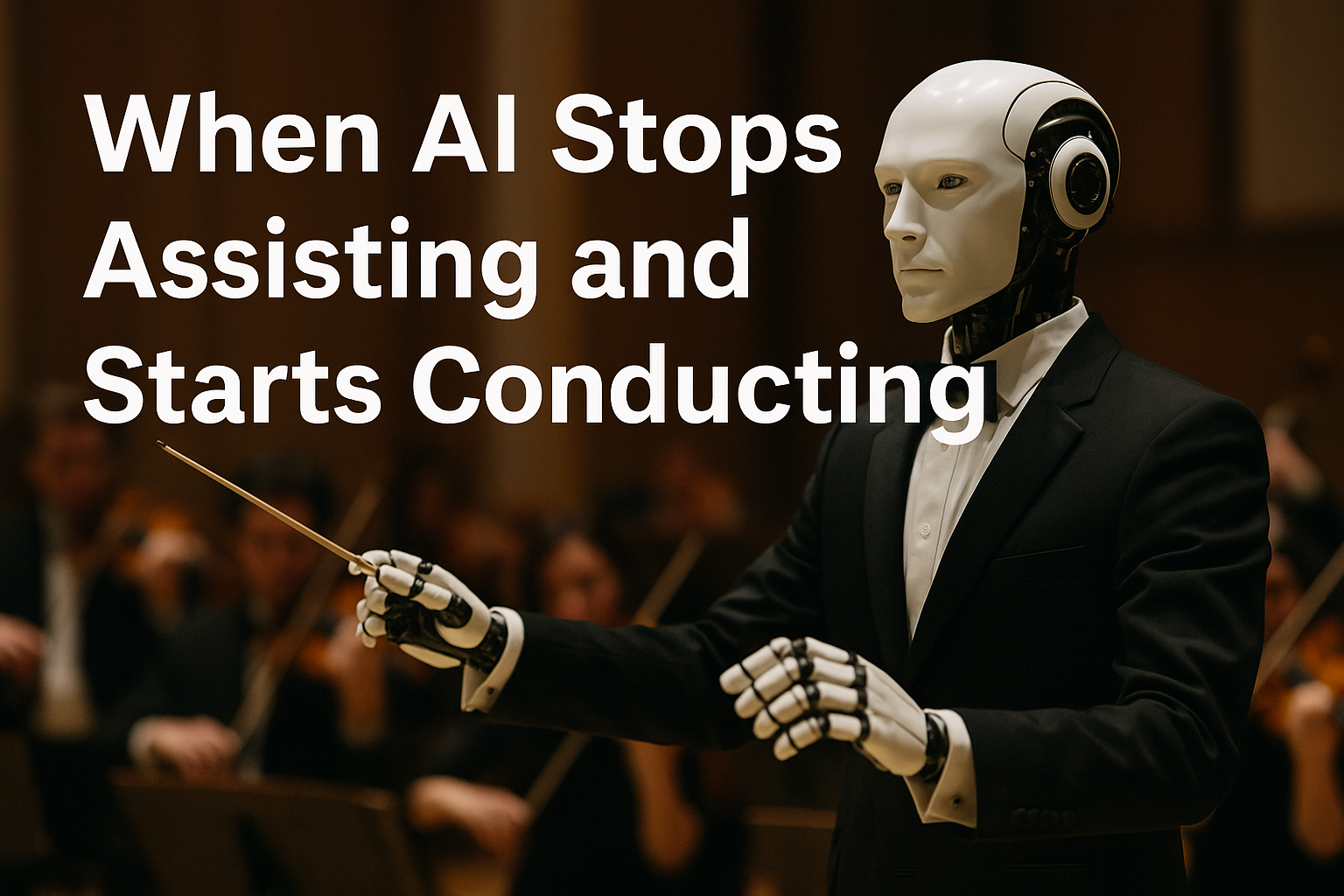
This is what happens when AI evolves from assistant to conductor.
The Line Most Companies Haven't Crossed Yet Most organizations treat AI like a smarter intern. You prompt it, it responds. You steer, it suggests. It waits for instructions.
That's the co-pilot model. Useful, but limited.
Agentic AI operates differently. It observes signals across your business and takes action within the boundaries you define. It doesn't wait to be asked. It monitors demand patterns, adjusts ad spend, reroutes resources, and flags anomalies while you sleep.
Gartner named agentic AI the top technology trend for 2025, projecting that 33% of enterprise software will embed these capabilities by 2028. More than 80% of business leaders plan to integrate it within three years.
The gap between early adopters and everyone else is widening fast.
From Reactive Tools to Proactive Infrastructure Here's what changed for that service company:
Their AI started detecting booking spikes forming three days ahead. It automatically adjusted ad spend, technician scheduling, and inventory orders. Marketing budgets shifted in real time based on which channels were actually converting that week.
Leadership dashboards appeared every morning summarizing what happened, what's trending, and what actions were already taken.
The business went from reacting to everything to anticipating everything. Same team size. Different operating system.
Companies implementing AI orchestration report 20-30% faster workflow cycles and up to 30% reduction in operational costs.
McKinsey projects AI agents will manage over 60% of repetitive enterprise workflows by 2025.
This is the shift from automation to orchestration. From executing tasks to coordinating intelligence.
What Leadership Becomes When AI conducts your operations, your role changes.
You stop managing people and start architecting intelligence. You define intent, set boundaries, establish values. The system operationalizes them.
Instead of approving every decision, you design the decision architecture. You set thresholds: "Within these parameters, move autonomously. Outside them, escalate."
Leadership teams that used to spend 60-80% of their time chasing information now spend that time on strategy, relationships, and foresight.
Decision speed becomes the new competitive moat.
The time between signal and verified action determines who wins.
The Literacy Gap Nobody's Talking About Most people think AI literacy means writing good prompts.
That's not literacy. That's syntax.
Real AI literacy is understanding how to architect decision flows. How to translate strategy into measurable rules. How to design systems that learn from outcomes and adjust autonomously.
Job postings for non-tech roles requiring AI skills offer 28% higher salaries—nearly $18,000 more per year. But the premium isn't for prompt engineering. It's for people who can design intelligence infrastructure.
The market is dividing into two groups: those who use AI tools and those who engineer intelligent systems. The first group will always be replaceable. The second will own the playbook everyone else runs on.
What This Means for You If you're still treating AI as a productivity tool, you're solving yesterday's problem.
The question isn't "How can AI help me work faster?" It's "How can AI help my business think continuously?"
Start by mapping your organization's real decision flow. Not the org chart. The actual path decisions take from signal to action. Where do they stall? Where does information get lost? Where do you repeat the same judgment calls daily?
Those patterns are your starting point.
Early adopters at McKinsey have seen productivity at least double. Employees from diverse backgrounds—including a French literature graduate—proved as capable as software engineers in building agentic workflows.
The barrier isn't technical skill. It's conceptual shift.
The Uncomfortable Truth We're heading toward what I call a cognitive aristocracy. Economic power will flow to those who own the decision logic that everyone else's work depends on.
Everyone will have access to AI tools. Few will have permission to modify the decision architecture those tools run on.
That's the new divide. Not between those who use AI and those who don't. Between those who execute within systems and those who design them.
The next generation of economic mobility won't come from climbing someone else's system. It'll come from building one worth climbing.
2025 is the tipping year. The companies that figure out orchestration now will operate at a fundamentally different velocity than everyone else.
The question is whether you're building the conductor or just learning to follow the beat.